
Kids Toothbrushes: How to Choose the Right One
Dr. Rafif Tayara, Specialist Pediatric Dentist in Dubai, explains the three things parents should check when choosing a kids toothbrush: head size, soft bristles and handle grip.
- الكاتبة
- Dr. Rafif Tayara, استشارية طب أسنان الأطفال
- الموضوع
- Daily care
- تاريخ النشر الأصلي
- آخر تحديث
- مدة القراءة
- 6 دقيقة قراءة
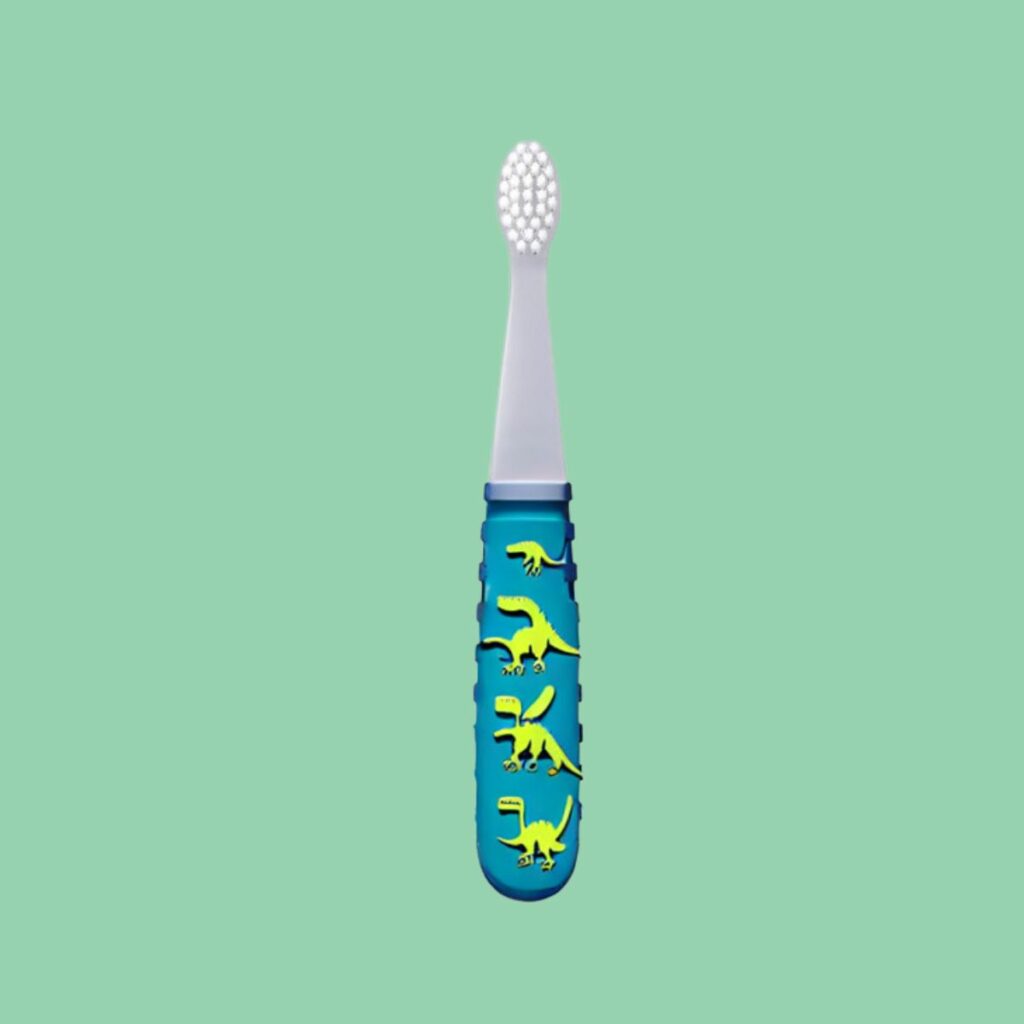
Many moms ask me during their child's first dental visit at JuniorDental in Dubai: “What is the best toothbrush for my child?” or “How do I choose the right toothbrush for my child's teeth?” It seems like a small decision, but it is a big deal for their teeth — and first impressions count. With so many options on the shelf, here are the top three things you need to know as a parent to choose the right toothbrush for your kid.
1. Which toothbrush size is best for my child's age?
The size of your child's toothbrush counts a lot. The ideal toothbrush for your child has a small head, so you can reach the back of the mouth and the back teeth. A small head also lets you brush your child's tongue without making them gag.
For newborns, use a baby toothbrush for 0–2 years. Its small head helps you softly brush the gums, the inside of the cheeks and the tongue, where formula milk or breastmilk residue settles in the crevices. Good oral hygiene starts early.
We usually recommend upgrading to a 3–5 year toothbrush, which has a bigger head, once your child has all their milk teeth — around 2 to 3 years of age.
2. Soft or hard bristles for a child's toothbrush?
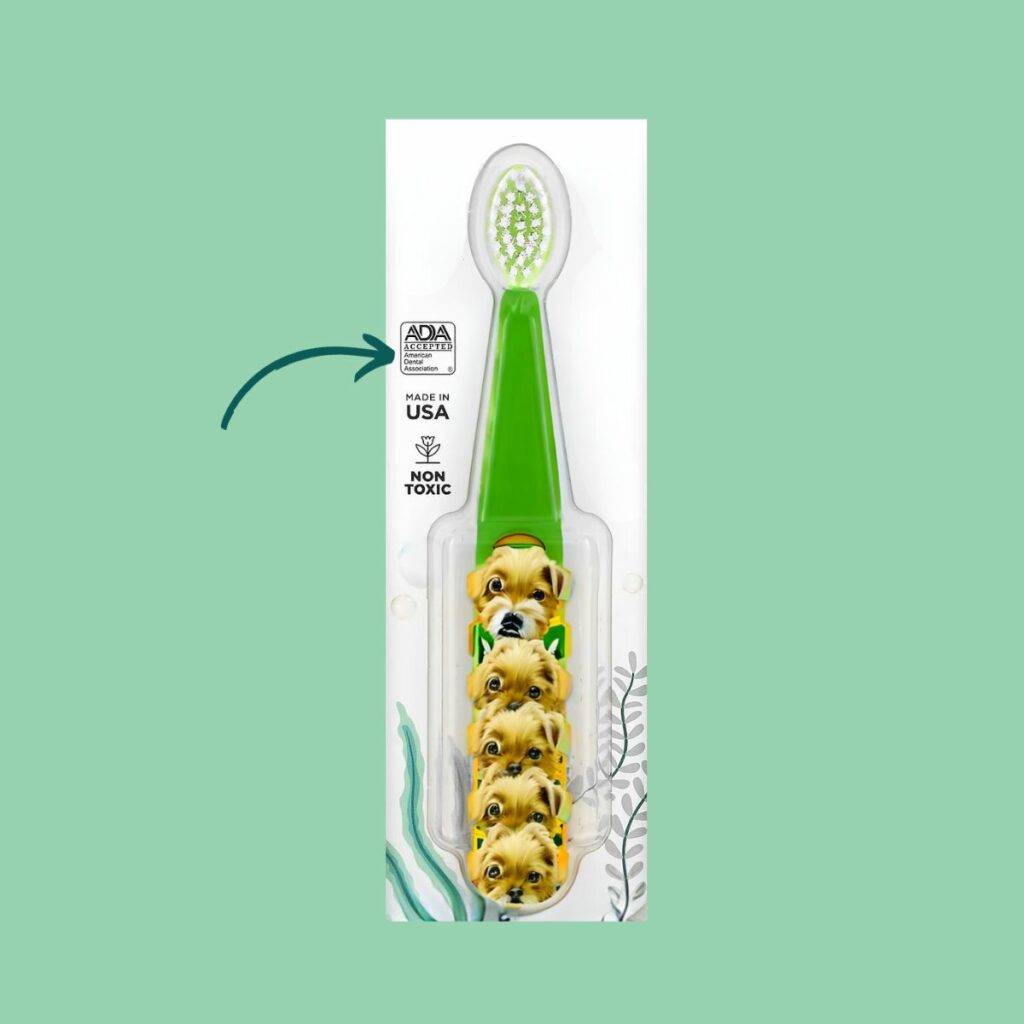
Always choose a toothbrush with soft bristles for your child. Look for filaments certified by a recognised medical seal, such as ADA Accepted, or by a certified standardised laboratory.
- Better brushing performance on small teeth
- Less trauma to your child's gums and enamel
- Bristles keep their shape longer, so you replace the brush less often
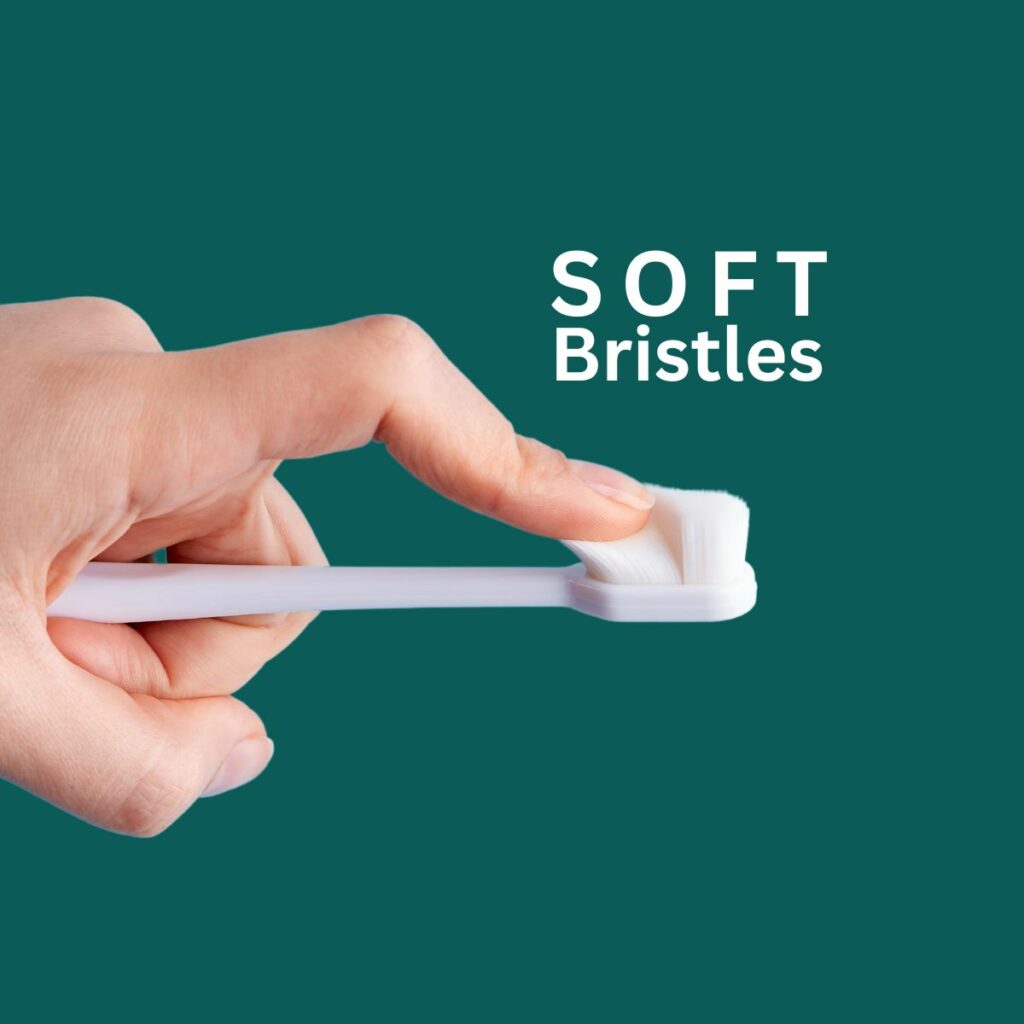
Look for a recognised quality seal
On the packaging, check for a quality mark such as the ADA Accepted seal. It tells you the bristles and head have been tested for safety and cleaning performance, rather than just designed to look appealing.
3. Which toothbrush handle design should I choose?
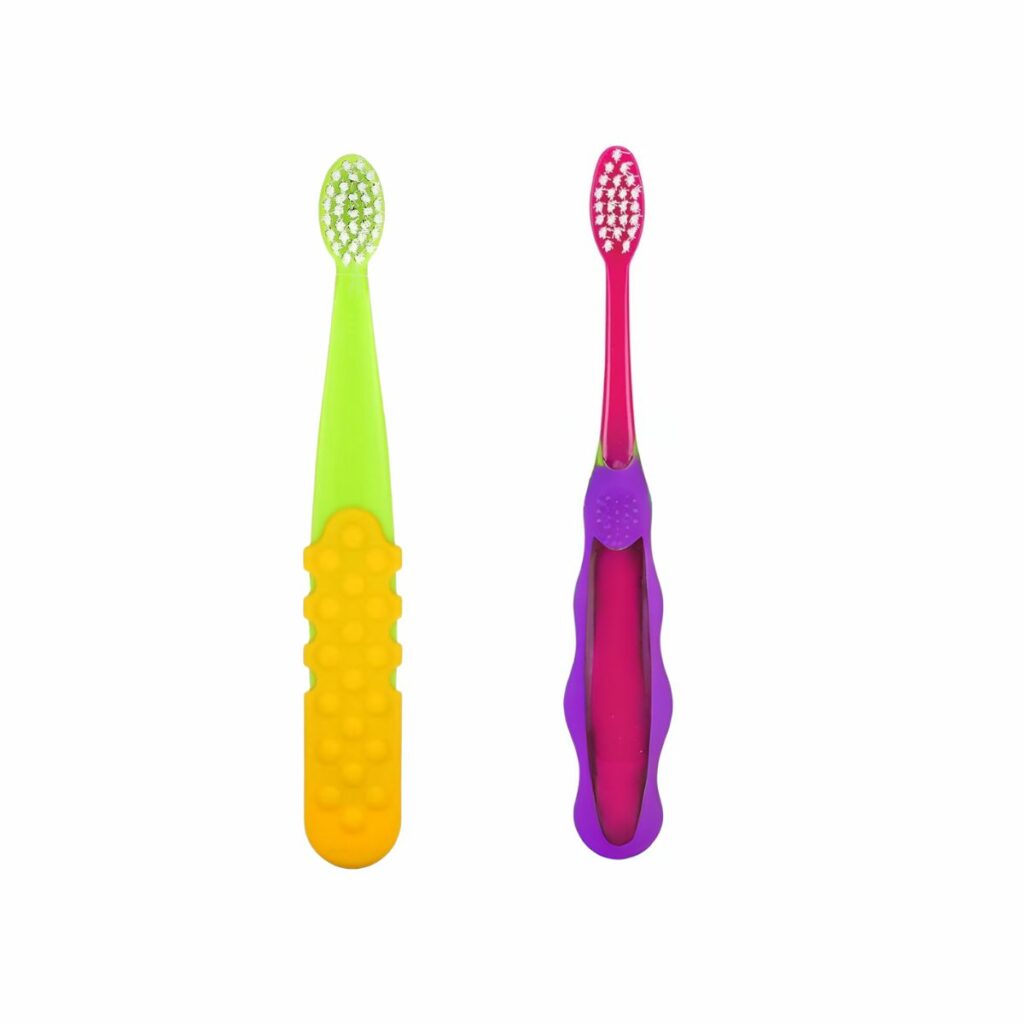
The grip is where all the fun comes in for your baby and child. Handles come in every form and shape: big or small, dinosaur or rounded, hollow or oversized, wooden or plastic — which gets confusing for parents and children alike.
I find oversized handles better, because they stop you or your child from pushing the brush too far into the mouth. A big handle also helps your baby or toddler train their fine motor skills and gives them a good start at becoming an independent brusher.
Pro tip: let your child help choose the toothbrush
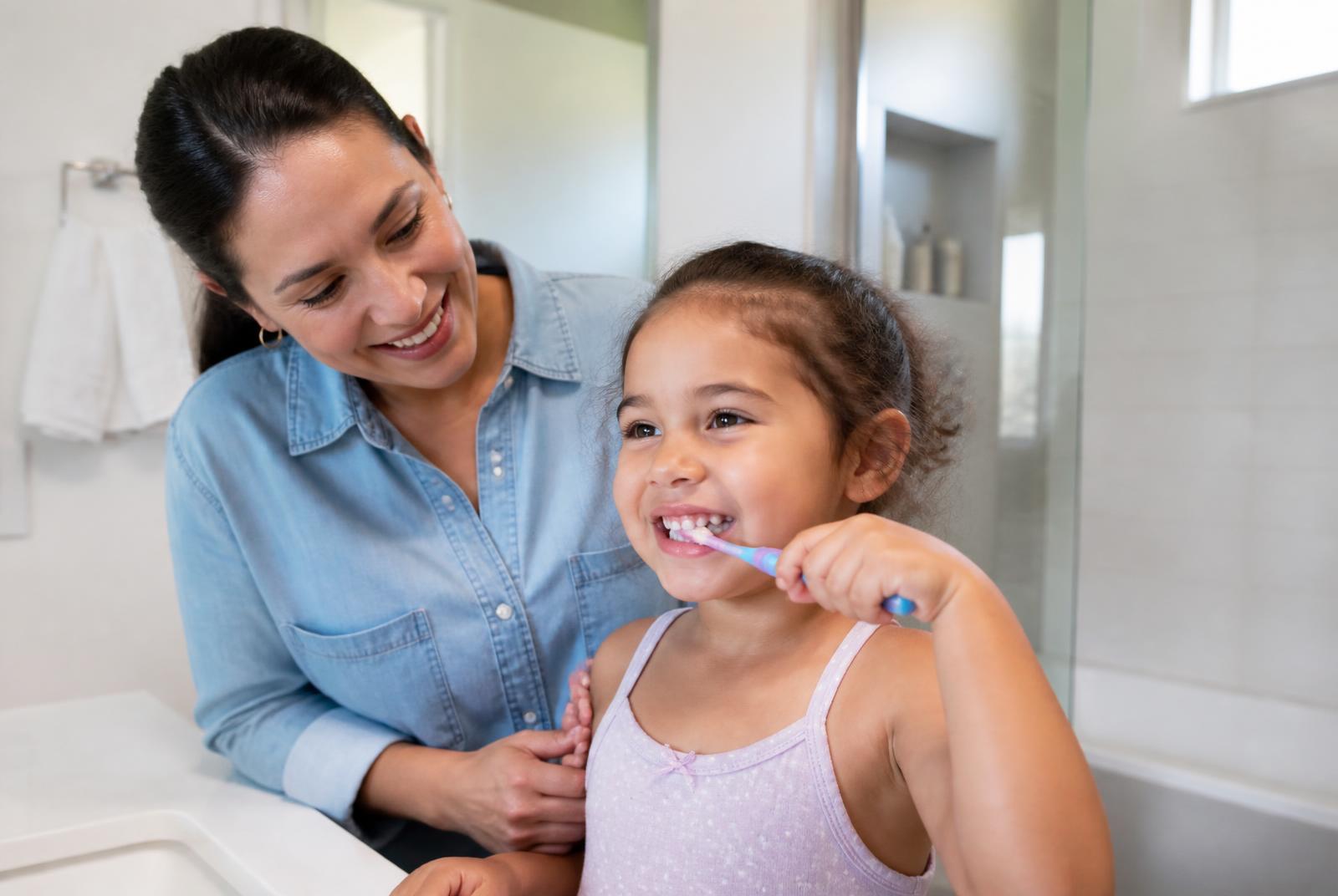
Involving your child in choosing their toothbrush really helps. Let them pick the colour, or a favourite character on the handle. It makes brushing easier to instil, more fun, and a positive experience.
In short
Choose a toothbrush with soft bristles, a big handle and an age-appropriate head size. Whatever the shape, babies and toddlers chew a lot on their brushes — so replace the toothbrush whenever the bristles splay, or after your child has been ill. In practice, that is often every few weeks.
Frequently asked questions
- What is the best toothbrush for my child?
- One with soft bristles, a small head suited to your child's age, and a chunky handle that is easy to hold. A recognised quality seal such as ADA Accepted is a good sign of tested bristle quality.
- When should I move my child to a bigger toothbrush?
- Use a 0–2 year baby brush for newborns and infants, then move to a 3–5 year brush with a slightly bigger head once all the milk teeth are in, usually around 2 to 3 years of age.
- Soft or hard bristles for children?
- Soft bristles, always. Firmer bristles do not clean better and can irritate a child's gums and enamel.
- How often should I replace my child's toothbrush?
- Whenever the bristles splay or after an illness. Because babies and toddlers chew on their brushes, this is often every few weeks rather than every three months.
- Where can I get advice on my child's brushing in Dubai?
- Dr. Rafif Tayara, Specialist Pediatric Dentist, reviews brushing technique and toothbrush choice with parents at JuniorDental in Umm Suqeim, Dubai, during your child's dental visit.
المصادر
اقرأ أيضًا
Prevention
The importance of oral health for children
Why children's oral health affects eating, speech, sleep, confidence and general health — explained by Specialist Pediatric Dentist Dr. Rafif Tayara in Dubai.
- تاريخ النشر
- الكاتبة
- Dr. Rafif Tayara
- مدة القراءة
- 6 دقيقة قراءة

First visits
Your child's first dental visit: what to expect
How to prepare a baby or toddler for a first dental visit, what happens in the appointment, and how to keep the experience calm and positive.
- تاريخ النشر
- الكاتبة
- Dr. Rafif Tayara
- مدة القراءة
- 5 دقيقة قراءة
Oral habits
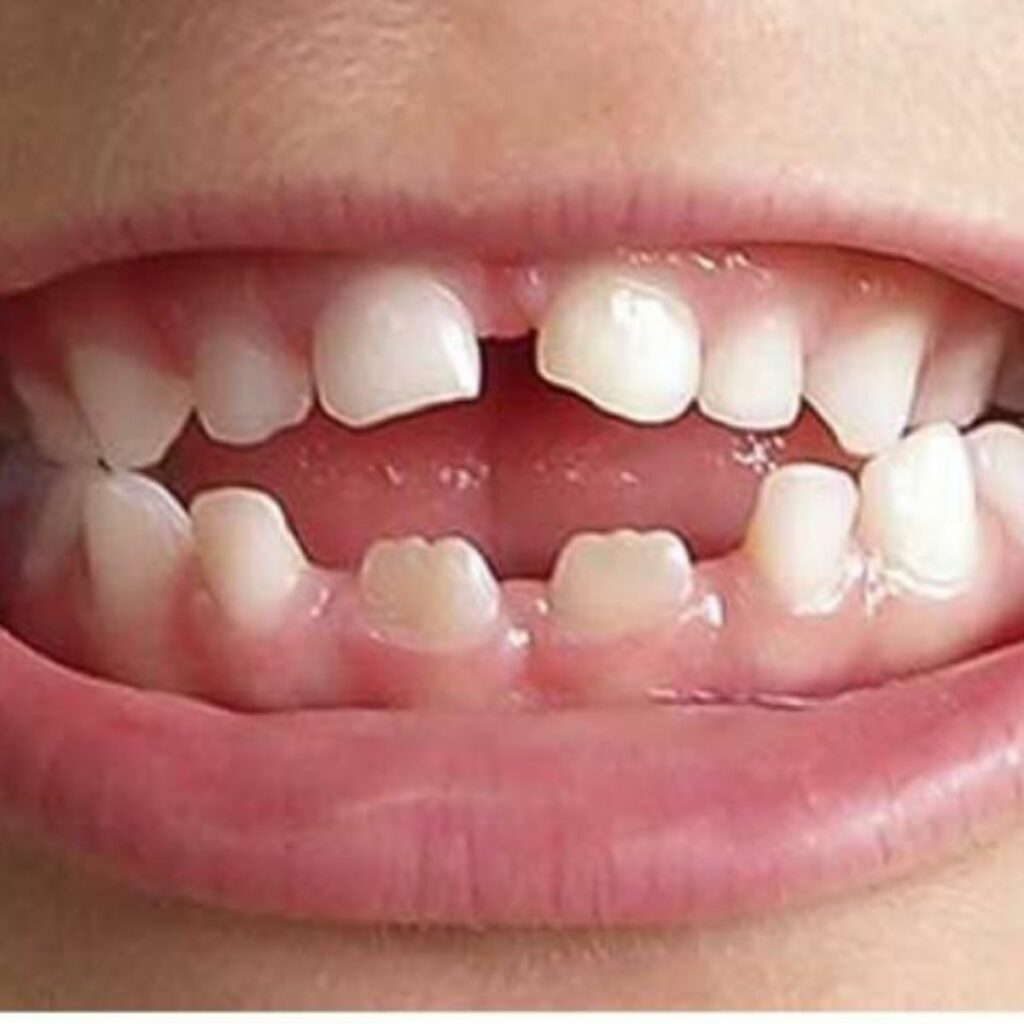
Dummy Teeth: Is Your Child’s Pacifier Harming Their Smile?
Dr. Rafif Tayara, one of Dubai’s best-reviewed dentists for kids and early ortho, explains the 3 reasons pacifiers cause ‘dummy teeth’ — and how parents can prevent them.
- تاريخ النشر
- الكاتبة
- Dr. Rafif Tayara
- مدة القراءة
- 7 دقيقة قراءة